
Estate planning isn’t just about passing on assets. It’s about preparing your family, protecting your wishes, and creating clarity for the people you care about most.
Over the next two decades, trillions of dollars are expected to pass from one generation to the next. Much of the conversation around this shift focuses on the size of the transfer. But for many families, the biggest challenges aren’t financial. They’re personal.
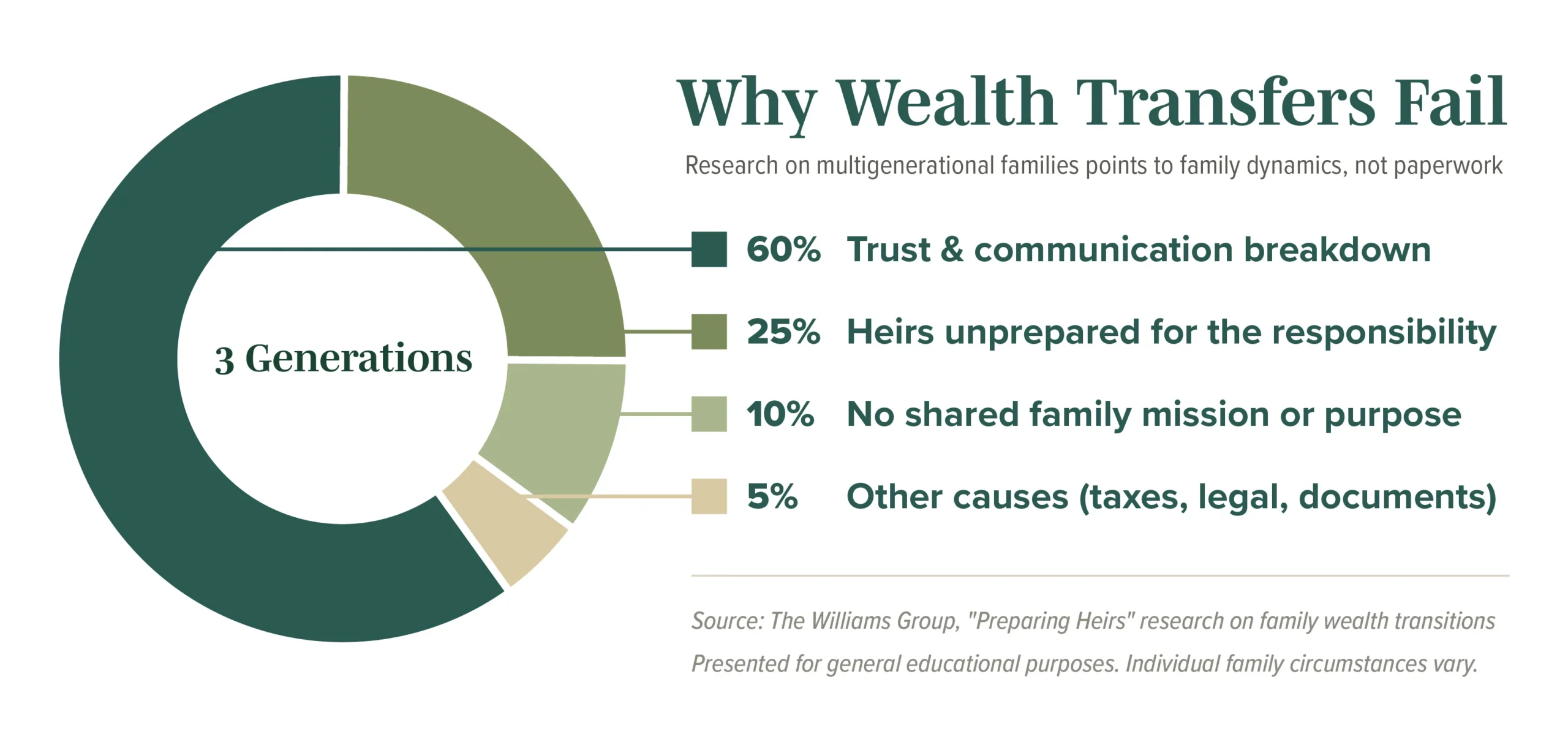
Family communication, preparing heirs, taxes, long-term care, beneficiary decisions, business succession, and charitable goals all play a role in whether a family’s wealth, and its values, survive the handoff. Research on multigenerational wealth transfers has found that a large share fail by the third generation, meaning the assets are gone and the family often struggles to explain why. The reasons behind that pattern have less to do with investment selection or tax strategy and more to do with communication, trust, and preparation.
That’s the heart of legacy planning. It’s not only about the documents you sign. It’s about the conversations you have and the family you leave equipped to carry things forward.
Legacy Is About More Than Assets
A legacy is built from more than a balance sheet. It includes your values, your family’s traditions, and the causes you care about. It includes the wisdom you’d like to pass along and the hope that your children and grandchildren make thoughtful decisions with what they receive.
Many families never define this clearly, which can lead to confusion or conflict later. Taking time now to talk through what matters most, not just what you own, can help set the stage for a smoother transition. If you’d like to go deeper on this idea, our articles on Preparing Heirs for Inherited Wealth and More Than an Inheritance look closely at how families can approach these conversations with more confidence.
Start With the Right Estate Planning Documents
Legacy planning still depends on having the right paperwork in place. At a basic level, most estate plans include:
- A will, which directs how your assets are distributed
- A trust, which can offer more control and, in some cases, help avoid probate
- Powers of attorney, which name someone to make financial decisions if you’re unable to
- A healthcare directive, which outlines your medical wishes
- Beneficiary designations, which often override what’s written in a will
Every family’s situation is different, which is why an estate plan should be built around your specific goals rather than a generic template. Beneficiary designations in particular are worth reviewing regularly. Our article on Transfer on Death vs. Trust Ownership walks through how those choices can affect what your heirs actually receive.
The Conversations That Matter Most
One of the most overlooked parts of estate planning is simply talking to your family about it. Adult children are often left guessing about who serves as executor or successor trustee, what their parents’ healthcare wishes are, or where important documents and passwords are kept.
A few conversations can go a long way toward preventing confusion later:
- Who is responsible for carrying out your wishes, and do they know it?
- Where are your legal documents, account information, and digital assets stored?
- What are your healthcare preferences, and have you discussed them with the people who may need to act on them?
Writing this information down in a letter of instruction can be one of the most practical steps a family takes. It’s rarely the most exciting part of planning, but it’s often the most appreciated later.
Don’t Let Long-Term Care Derail Your Legacy
A well-built estate plan can still be disrupted by an unplanned long-term care need. The cost of extended care can affect retirement income, deplete savings faster than expected, and complicate the very assets you intended to pass along.
This is one of the areas where coordinated planning matters most. Long-term care considerations touch retirement income, investment strategy, and estate planning all at once, which is why it helps to look at them together rather than in isolation. Our article on Long-Term Care and Your Legacy covers this in more detail.
Taxes Can Shape Your Legacy
Taxes rarely make for exciting conversation, but they can meaningfully affect what your family ultimately receives. Gifting strategies, the tax treatment of inherited accounts, and charitable giving can all shift outcomes depending on how they’re structured and timed.
This is where investment management, tax planning, and estate planning tend to work best together rather than as separate exercises. A change to one often affects the others, and coordinating them can help you make more informed decisions as your plan evolves.
Business Owners Face Additional Decisions
For business owners, legacy planning involves an added layer of complexity. Succession planning, buy-sell agreements, business valuation, and the transition of leadership to family members or partners all require advance thought. These decisions can carry as much weight as any personal estate planning document, and they often take longer to work through, so starting early tends to make the process smoother.
Estate Planning Is Also Emotional
Numbers and documents are only part of the picture. Many of the hardest decisions in estate planning are emotional rather than financial: what feels fair among siblings, how to handle a blended family, or what to do with a sentimental item that can’t simply be divided.
Fairness and equality aren’t always the same thing, and families who talk through these questions in advance tend to face fewer surprises later. Our article on The Legacy Mindset: How Emotions Shape Estate Planning Decisions explores this side of planning in more depth.
Your Estate Plan Should Evolve With Your Life
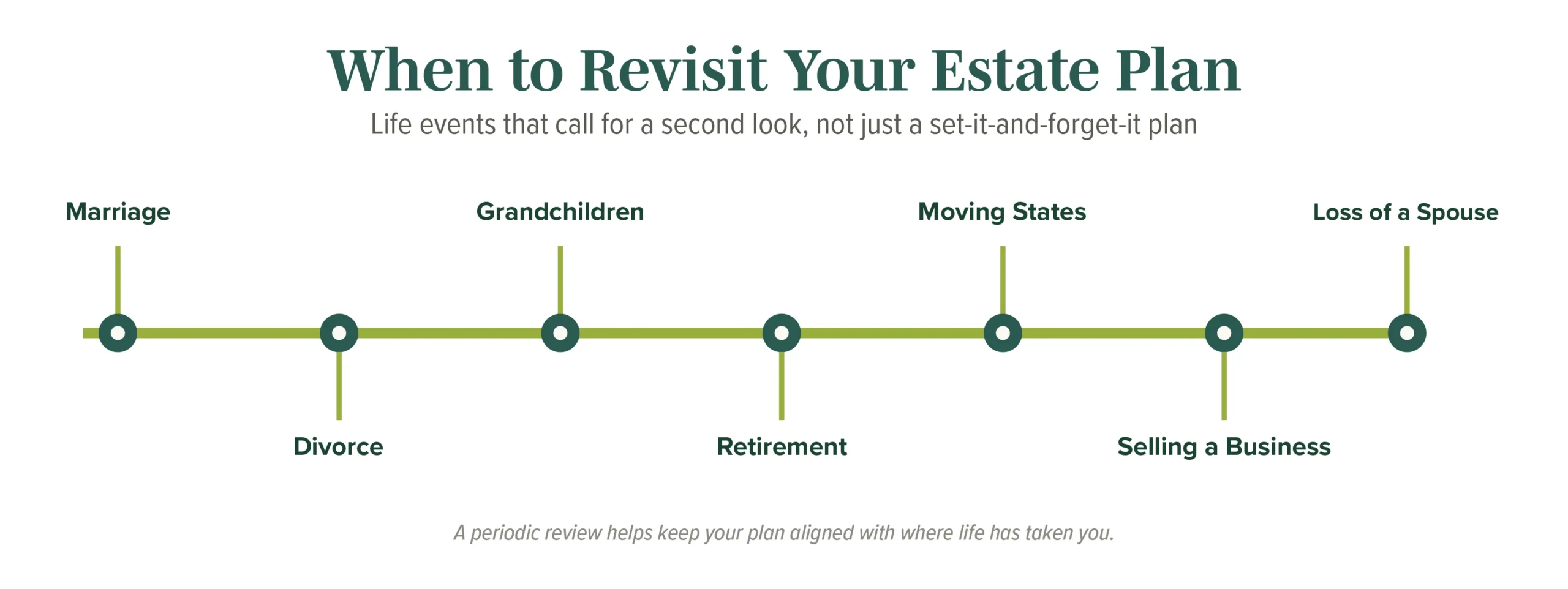
An estate plan isn’t something to complete once and set aside. Life events such as marriage, divorce, the birth of grandchildren, retirement, a move to a new state, selling a business, or the loss of a spouse can all affect whether your existing plan still reflects your wishes.
A periodic review, rather than a one-time exercise, helps keep your plan aligned with your circumstances as they change.
Bringing It All Together
A meaningful legacy isn’t measured only by what you leave behind. It’s measured by how prepared your loved ones are to carry it forward.
Estate planning often intersects with retirement planning, investment management, tax planning, and charitable giving. Coordinating these pieces can help families make more informed decisions while keeping their long-term goals in focus.
If it’s been several years since you’ve reviewed your estate plan, now may be a good time to revisit it. A conversation today can help provide greater clarity for tomorrow.
It may be worth a conversation. Schedule a call with James Investment to talk through where your plan stands today.
Schedule A Call
This information is of a general nature and does not constitute financial advice. It does not take into account your individual financial situation, objectives, or needs, and should not be relied upon as a substitute for financial or other professional advice to assess whether it is appropriate for your particular circumstances. This does not constitute an offer to sell, or a solicitation to buy, any financial product, service, or program. Investing involves risk, including loss of principal. Past performance is no guarantee of future results.